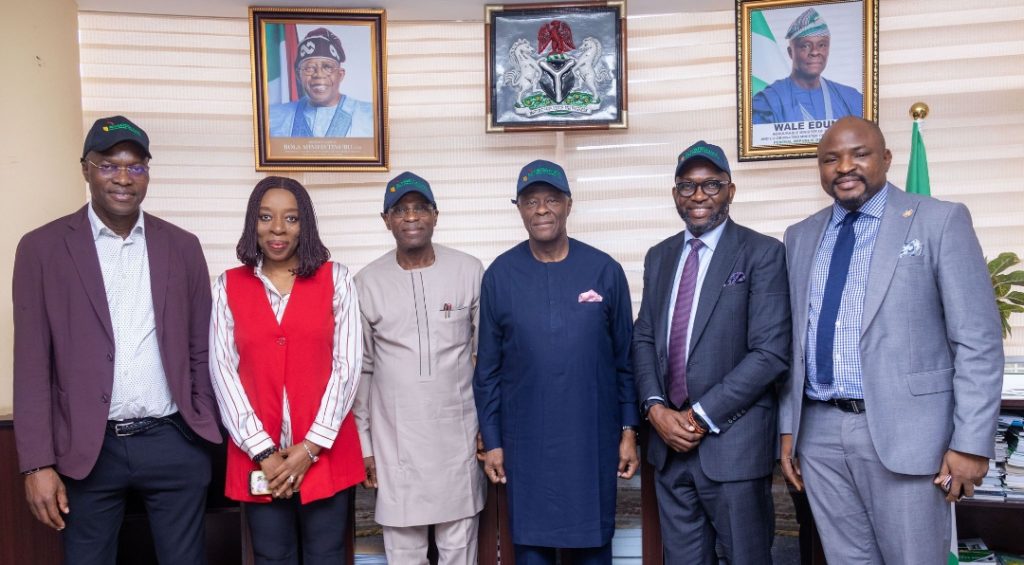
A delegation from Renaissance Africa Energy Company Limited (RAEC) today paid a courtesy visit to the Honourable Minister of Finance and Coordinating Minister of the Economy, Mr. Wale Edun, at his office in Abuja, as part of ongoing engagement with strategic indigenous players in Nigeria’s energy sector.
The delegation was led by Dr. Layi Fatona, Chairman of RAEC, alongside Engr. Tony Attah, the company’s Managing Director and Chief Executive Officer. The purpose of the visit was to formally brief the Minister on RAEC’s recent acquisition and operational takeover of Shell Petroleum Development Company’s (SPDC) onshore assets in Nigeria.
During the meeting, the RAEC leadership shared key updates, highlighting that since assuming control of the assets, the company has ramped up production to over 200,000 barrels per day—a major milestone for both RAEC and the broader Nigerian oil and gas industry.
Dr. Fatona and Engr. Attah reaffirmed RAEC’s full alignment with the Federal Government’s economic priorities, particularly in revenue generation, job creation, and upstream expansion. They reiterated their long-term commitment to community engagement and responsible energy development.
In his remarks, Minister Edun warmly welcomed the delegation and applauded the operational strides made by RAEC. He noted that the increasing participation of Nigerian-owned companies in key sectors reflects a broader shift toward homegrown solutions and inclusive economic growth.
The Minister reiterated President Bola Tinubu’s commitment to fostering a level playing field for all private sector actors and stressed the importance of sustained collaboration between government and industry to deliver long-term value to the nation.
The meeting concluded with a shared understanding of the vital role indigenous firms like RAEC will play in Nigeria’s energy transition and macroeconomic advancement.
Cover Photo Caption, L- R: Dr. Igo Weli – General Manger Relations and Sustainable Development, Mrs Onyekachi Igwe :Government Relations, Wale Edun : Honourable minister For Finance and Coordinating Minister of the Economy, Dr. Layi Fatona: Chairman, Engr Tony Attah: MD/CEO and Temitope :Special Adviser to the Minister of Finance
The Independent National Electoral Commission (INEC) has published the final list of candidates for the 2025 Anambra State Governorship Election, in line with the Electoral Act 2022. This marks a critical milestone in the electoral process and formally ushers in the campaign season ahead of the election scheduled for Saturday, 8th November 2025.
In a statement issued on Wednesday, 4th June 2025, the National Commissioner and Chairman, Information and Voter Education Committee (IVEC), Mr. Sam Olumekun, mni, confirmed that sixteen political parties successfully nominated candidates and submitted their details via the Commission’s online portal by the deadline of 6:00pm on Monday, 12th May 2025, following the conduct of party primaries.
Mr. Olumekun noted that the publication of the personal particulars of the nominated candidates was followed by a window for voluntary withdrawal and substitution, as provided in Section 33 of the Electoral Act 2022. Within this period, the African Democratic Congress (ADC) conducted a fresh primary to replace its governorship candidate, while four parties—Accord (A), African Action Congress (AAC), Labour Party (LP), and the New Nigeria Peoples Party (NNPP)—replaced their Deputy Governorship candidates. This substitution window closed on Monday, 2nd June 2025.
With the conclusion of candidate substitutions, the Commission has now released the final list of candidates contesting the election. The published list includes the names of candidates and their running mates, along with details such as age, gender, academic qualifications, and party affiliation. The full list is available on INEC’s website and official social media platforms for public access.
According to the IVEC Chairman, of the sixteen parties participating in the election, the African Action Congress (AAC) and the National Rescue Movement (NRM) have nominated female governorship candidates. Additionally, six parties—Accord (A), All Progressives Congress (APC), Action Peoples Party (APP), Boot Party (BP), Labour Party (LP), and Zenith Labour Party (ZLP)—have fielded female Deputy Governorship candidates. However, no party nominated a person with disability. The candidates’ ages range from 36 to 71 years, reflecting a generational spread across the field.
The publication of the final list also signals the official commencement of electioneering campaigns. In accordance with Section 94(1) of the Electoral Act 2022, political parties and candidates may now begin public campaigns from Wednesday, 11th June 2025. The campaign period will run until midnight on Thursday, 6th November 2025.
INEC has, however, reminded political actors of the need to conduct campaigns in a peaceful, respectful, and lawful manner. Sections 92 and 93 of the Electoral Act prohibit the use of inflammatory or abusive language, incitement to violence, or destruction of opponents’ campaign materials. Parties and candidates must also be granted equal access to public facilities for rallies, processions, advertising, and media coverage. The Commission further emphasized the provisions of Section 95(2), which prohibits the use of incumbency to confer undue advantage or disadvantage on any candidate or party.
The candidates, their deputies, and the political parties on the final list are as follows:
*ACCORD (A): Onyeeze Chidi Charles (Governor), Ezeadili Appolonia O. (Deputy Governor) *ACTION ALLIANCE (AA): Nweke Ezechukwu Japhet (Governor), Obi Elvis Anayochukwu (Deputy Governor) *AFRICAN ACTION CONGRESS (AAC): Ifemeludike Chioma Grace (Governor), Mgbemena Kingsley Ikechukwu (Deputy Governor) *AFRICAN DEMOCRATIC CONGRESS (ADC): Nwosu Chima John (Governor), Nwobu Geoffery Ndubisi (Deputy Governor) *ALL PROGRESSIVES CONGRESS (APC): Ukachukwu Nicholas (Governor), Ekwunife Uche Lilian (Deputy Governor) *ALL PROGRESSIVES GRAND ALLIANCE *(APGA): Soludo Charles Chukwuma (Governor), Ibezim Onyekachukwu Gilbert (Deputy Governor) *ALLIED PEOPLES MOVEMENT (APM): Otti Cyprian Echezona (Governor), Ezeigwe Chuka Samuel (Deputy Governor) *ACTION PEOPLES PARTY (APP): Nweke Christopher Chukwudubem (Governor), Okeke Blessing Ebele (Deputy Governor) *BOOT PARTY (BP): Okeke Chika Jerbry (Governor), Ugboma Happiness (Deputy Governor) *LABOUR PARTY (LP): Moghalu George Nnadubem (Governor), Okaro Ifeoma Veronica (Deputy Governor) *NEW NIGERIA PEOPLES PARTY (NNPP): Onyejebu Geoffery (Governor), Arinze Chukwuka Victor (Deputy Governor) *NATIONAL RESCUE MOVEMENT (NRM): Ndidi Christy Olieh (Governor), Egbe Ekene Reginald (Deputy Governor) *PEOPLES DEMOCRATIC PARTY (PDP): Ezenwafor Jude (Governor), Okeke Francis Chukwudi (Deputy Governor) *SOCIAL DEMOCRATIC PARTY (SDP): Chukwurah Vincent (Governor), Odira Atueyi Vanatius (Deputy Governor) *YOUNG PROGRESSIVES PARTY (YPP): Chukwuma Paul Chukwuka (Governor), Okagbue Uzuegbuna Izuchukwu (Deputy Governor) *ZENITH LABOUR PARTY (ZLP): Ugwoji Uchenna Martin (Governor), Obi Chibuzo Faith (Deputy Governor)
Mr. Olumekun reaffirmed the Commission’s commitment to a credible, inclusive, and transparent electoral process and urged all stakeholders to play their part in ensuring peaceful and issue-based campaigns ahead of the Anambra Governorship Election.
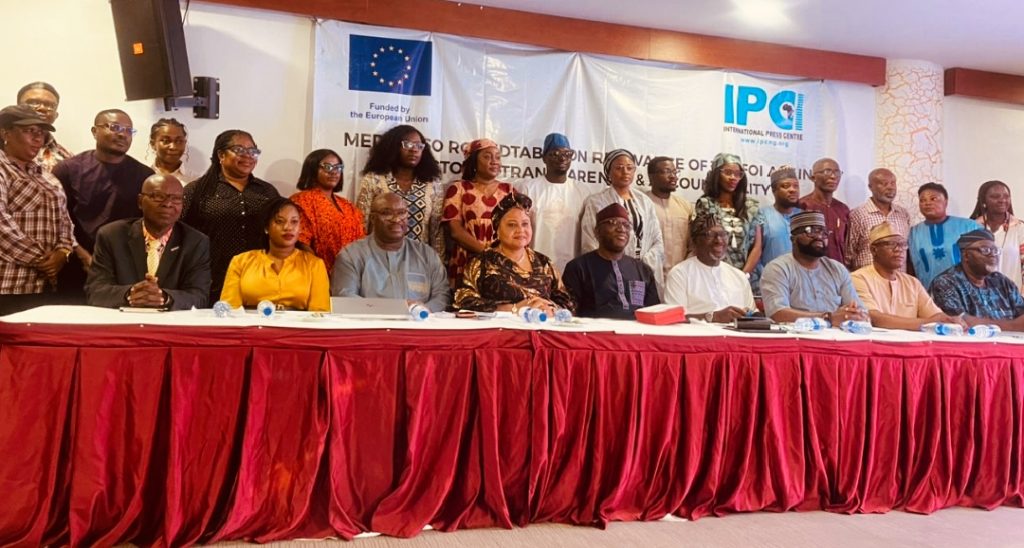
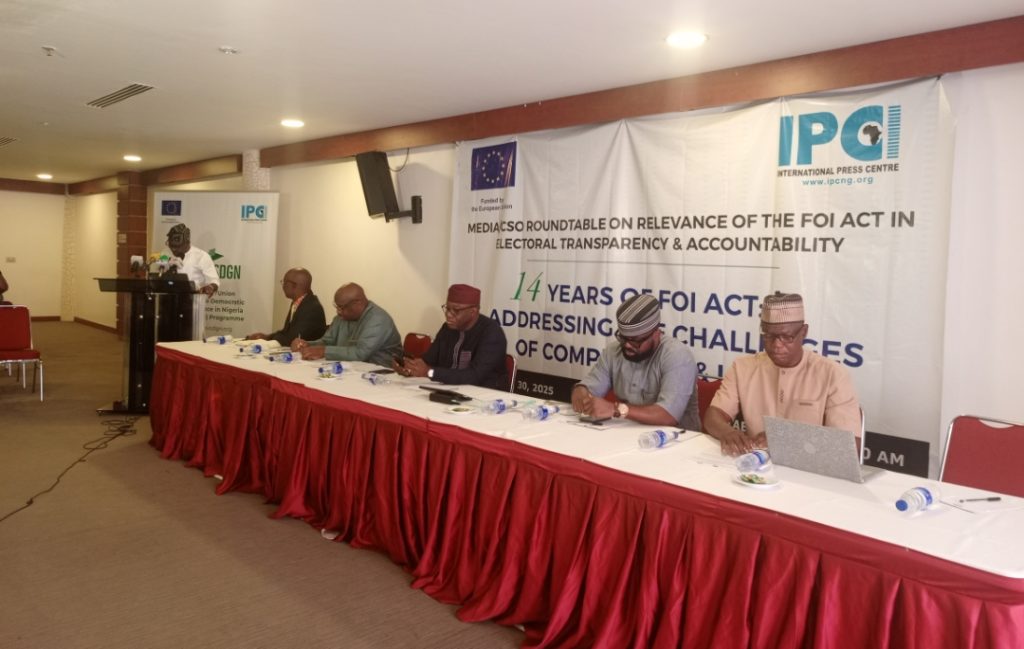
The International Press Centre (IPC), hosted a one-day Media/CSO roundtable on May 30, 2025, at the Bon Hotel Octagon in Abuja, to commemorate the 14th anniversary of the Freedom of Information (FOI) Act in Nigeria. The event, supported by the European Union under the EU-SDGNII Programme discussed the relevance of the FOI Act in promoting electoral transparency and accountability.
The event will be was chaired by Dr. Kayode Fayemi, former Governor of Ekiti State and former Chairman of the Nigeria Governors Forum.
Stakeholders from the House of Representatives, Ministry of Justice, and former Governor of Ekiti State, Kayode Fayemi, CSOs and others renewed calls for more robust enforcement of the Freedom of Information Act, emphasising its critical role in promoting transparency, rebuilding public trust, and curbing misinformation in governance.
The spokesperson for the House of Representatives, Akin Rotimi, acknowledged public skepticism toward lawmakers and stressed the need for sustained collaboration between government, civil society, and media organisations.
Marking the second anniversary of the President Bola Tinubu administration and the upcoming midterm of the 10th National Assembly, Rotimi described the forum as an opportunity for reflection and renewed commitment to democratic principles such as transparency and accountability.
Rotimi highlighted ongoing efforts by the House under Speaker Tajudeen Abbas to foster a more transparent legislature through technology and public engagement.
He announced that there will be an open week which will enable media and civil society representatives to directly interact with the House to assess its performance.
He lamented the late submission of FOI report by the Federal Ministry of Justice ‘This reflects deeper structural challenges. This status quo is unacceptable,” he said.
Rotimi called for greater investment in digital tools and partnerships to promote credible information ecosystems, stressing that transparency and accountability are constitutional obligations, not political favors.
“The FOI Act is not merely a tool. It is a foundation for democratic accountability. Transparency is not optional. It is constitutional. Accountability is not a political favour. It is a democratic obligation,” he said.
The Attorney-General and Minister of Justice Lateef Fagbemi underscored the FOI Act’s importance in electoral transparency.
Fagbemi, represented by the Head of the FOI unit at the Ministry of Justice, Godwin Haruna, noted that the law, since its enactment in 2011, has empowered citizens, journalists, and civil society groups by allowing access to critical information such as campaign finances, voter registrations, and electoral results.
Fagbemi highlighted how the Act can improve electoral integrity by enabling scrutiny of campaign funding, voter registration data, electoral results, and the qualifications and conduct of electoral officers.
He encouraged Nigerians to utilise the FOI Act fully as a means to promote transparency and accountability without resorting to protests or riots.
The AGF appealed, “We do not need to riot. We do not need to protest. But before you can do any protest, you should be able to request for records from INEC. The use of this Act will encourage transparency and accountability in public sectors.”
Former Ekiti State Governor, Dr. Kayode Fayemi, urged civil society and media to move beyond mere access to information and focus on leveraging it to achieve genuine transparency and accountability in governance.
Drawing from his personal experience with the Act, he recalled how his asset declaration received significant media attention when he assumed office, which accelerated the domestication of the FOI Act in Ekiti State.
Fayemi cautioned against superficial use of information in the digital era, noting that access to information does not automatically translate to transparency or accountability.
Fayemi, who previously chaired the Nigeria Governors’ Forum, criticised the decline of investigative journalism and thoughtful civic engagement amid social media proliferation.
Reflecting on governance challenges, the former governor highlighted the lack of public awareness regarding budget implementation delays, questioning why prolonged absence of allocations in government budgets goes unchallenged.
He stressed that reforms must be sustained and that government openness should go beyond token gestures.
Calling on media and civil society to deepen their analyses and remain vigilant, Fayemi emphasised the need to support public institutions in fulfilling their mandates, noting that government transparency is a vital step toward transforming governance in Nigeria.
“We have information now but what use do we put that information to as civil society actors
“It’s not so much the letter of the law that is always important, it’s what we do with the law.
“Government has often been treated as a mythical entity before now and it is like an elephant. But opening it up through efforts like this is a step in the right direction,” he concluded.
The crème de la crème of Nigerian sports will converge in Abeokuta this weekend, as the nation’s foremost multi-sport event, the National Sports Festival (NSF), kicks off in grand style.
The 22nd National Sports Festival , dubbed “Gateway Games Ogun 2024,” will open with a colourful ceremony that promises cultural splendour and athletic excellence. Vice President, His Excellency, Kashim Shettima will formally declare the Games open, marking the commencement of two weeks of national unity through sport.
The spirit of patriotism, unity, and celebration—hallmarks of the National Sports Festival since its inception in 1973—will once again come alive as Ogun State plays host, following its memorable hosting in 2006.
Ogun State Governor, His Excellency, Prince Dapo Abiodun, has assured the nation that the state is fully prepared to host athletes, officials, and guests from across the country.
The leadership of the National Sports Commission (NSC), led by Chairman Mallam Shehu Dikko and Director General Hon. Bukola Olopade, emphasized that the National Sports Festival is not merely a tradition but a strategic platform to discover emerging talents and strengthen national unity through the power of sport.
This year’s edition breaks new ground with the introduction of a symbolic “38th state”—the Invited Junior Athletes (IJA)—a team of exceptional young talents competing independently to spotlight Nigeria’s future champions.
Over 10,000 athletes from all 36 states, the Federal Capital Territory, and the IJA team will compete in 33 sports, making this edition one of the most extensive in the festival’s rich history. It stands as a celebration not just of athletic talent, but of the enduring spirit of the Nigerian people.
Beyond the competition, Gateway Games Ogun 2024 will showcase Nigeria’s diverse cultural heritage. From the pageantry of the opening and closing ceremonies to daily exhibitions of traditional music, dance, and art, the festival promises to be a grand celebration of the nation’s identity.
Events will take place across multiple venues, including the Alake Sports Centre, MKO Abiola Stadium, Remo Stars Stadium, and other key facilities. The Games Village will be hosted at Babcock University, providing a comfortable and secure environment for athletes and officials.
As Abeokuta welcomes the best of Nigerian sports and culture, the 22nd National Sports Festival stands as a powerful reminder of what the nation can achieve through shared passion, pride, and purpose.
National Sports Commission (NSC), Chairman Shehu Dikko was hosted by the Vietnamese Ambassador to Nigeria, H.E Bui Quoc Hung alongside the President of the World VOVINAM Federation, Dr. Mai Huu Tin.
Key discussions centered on growing the VOVINAM sport in Nigeria and using sports as a gateway for deeper investment, trade, and cultural collaboration between both nations.
This dialogue aligns with the Renewed Hope Initiative and NSC’s goal of using sport as a tool for national development, empowerment, economic advancement and international diplomacy.
Various design control measures were recommended in order to provide appropriate means and procedures for future developments. In order to achieve a harmonious and well organized urban fabric as well as enforcing spatial order, design control measures were introduced with details provided for each block within the central area. They include, grid system, wall line, height requirement, level control, floor area ratio, building coverage, location of cores, pedestrian walk way, portico, access and access zone and penetration requirements.
The area identified by the Kenzo Tange plan as future expansion area subsequently constitute the Phase II of the Central Area. The development control standard and regulations for the second phase, which commenced from the N1 Arterial named Olusegun Obasanjo Way, to the Ring Road I, later named the Nnamdi Azikiwe Expressway, was produced by AIMS consultants.
A new land use plan was subsequently produced in which many of the initial proposals were reviewed. Unlike the Kenzo Tange report, AIMS provided regulations and details on each plot individually. Planning is a human endeavor which can never be infallible. Thus re-planning becomes imperative for some proposals in the course of implementation, so long as it was not a product of satisfying selfish aggrandizement. Many of those aspects that were genuinely driven were glaring and obvious.
The challenges faced by those in charge of the implementation are two ways. Many of the pioneer administrators, specifically, Town Planners who maintained the principles and ethics of their profession, by resisting the unnecessary and selfish orders to interfere with the plans, fell victims of official highhandedness. On the other hand, some of the upright FCT administrations would apply the big sticks on the errant civil servants caught in the act of official manipulations aimed at changing the plans.
Actually what the Plan envisaged at the Central Area District, apart from the major public institutions for making Abuja to function as the Federal Capital City of Nigeria, was to have the Central Business District that will provide lands for the National headquarters of all, or most of the multinational organizations and businesses in Nigeria.
The Embassy zone was originally proposed in the Kenzo Tange plan to be located outside the Three-arm zone circle, opposite the Supreme Court Complex. But the area now accommodates private residential houses occupied by highly influential citizens who enjoys the security provided by the Villa. Meanwhile, the Embassy Zone is now accommodated at the Central Area Phase II, where the AIMS Consultants provided the standards and regulations for their developments on individual plot basis.
Among the features originally proposed to be developed in the Central Area District which location was not changed is the Liaison Offices for all the States in the country. Although they later fell inadequate due to later new States creations. However, the Authority tried in containing them within.
It could be observed that in-between the Ministries and Cultural Zone at the northern section there exist a natural valley, it was proposed for housing. While at the southern section it was to be developed as Ministries Garden, to serve as the green component of the Ministries Zone. Also, within the Ministries Zone other Gardens were proposed. Unfortunately, these Gardens as proposed are nowhere to be found today. On the other hand, proposing a housing development at the valley in a purely institutional land of the Central Area District was actually an aberration.
According to the Kenzo Tange plan, what is to be developed at the center of the Cultural Zone is the National Square and the Municipality. At the northern section are, the National Theatre, National Museum, Exterior Exhibition Garden and National Mosque. While at the southern section is the Abuja Cathedral, which name was later changed to the National Ecumenical Center, in order to give all the Christians sects sense of belonging. Others are the National Library and the International Conference Center.
It must be observed that the National Square known as the Eagle Square, is now located in between the Federal Ministries buildings at the Ministries Zone. The location was originally earmarked for sub transportation center as called by Kenzo Tange. The Parade Ground at Area 10, Garki I District was the initial and temporary facility used for the National celebrations in Abuja. It is now used not only for the FCT, but also, other National events.
The first National Day celebration held in Abuja was in 1982 during the Shehu Shagari regime, in the 2nd Republic. Subsequently, in 1986 by President Ibrahim Babangida. The experience gained from hosting the initial events in Abuja, with regards the efficiency of the activity and the size demands, would definitely have been the driving force for rethinking on the location and size of the National Square. Hence the jettisoning of the original meager size and location originally proposed by the Kenzo Tange plan.
In the later plan, the original location proposed for the International Conference Center was also reviewed interchangeably with that of the FCDA Secretariat, in order for the FCDA to be located in close proximity with the headquarters and offices of other public institutions of the FCT Administration. To be continued.
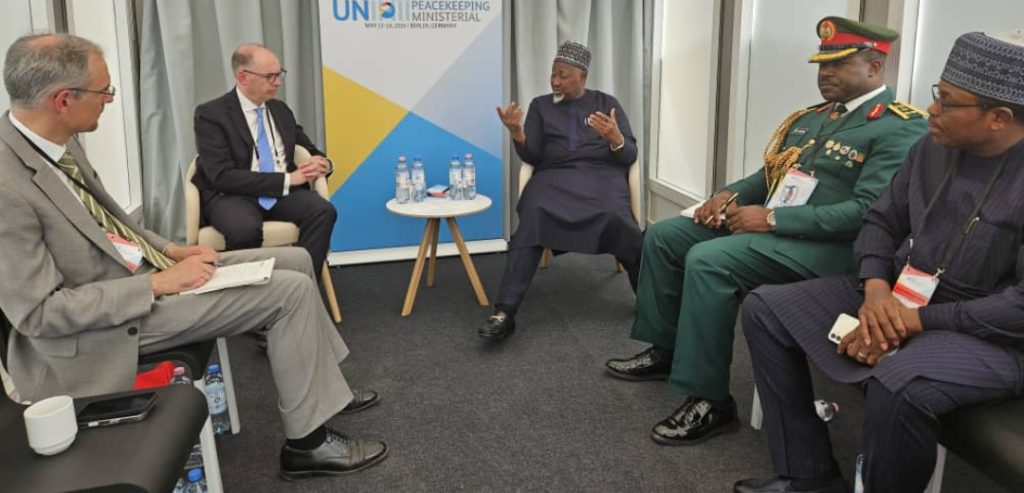
BADARU ATTENDS UN PEACEKEEPING MINISTERIAL 2025 IN BERLIN
Oru Leonard
The Honourable Minister of Defence H.E. Mohammed Badaru Abubakar CON, mni, is currently attending the UN Peacekeeping Ministerial 2025, taking place from May 13th to 14th in Berlin, Germany. This significant international event, themed “Future of Peacekeeping,” brings together leaders and key stakeholders from around the globe to discuss the evolving landscape of peacekeeping operations and collaborative efforts to promote global security.
Among the distinguished attendees are Antonio Guterres, the United Nations Secretary General; Boris Pistorius, Minister of Defence of the Federal Republic of Germany; and Dr. Joham Wadephul, Minister for Foreign Affairs of the Federal Republic of Germany. Their participation underscores the importance of international cooperation in addressing contemporary security challenges.
Upon his arrival, Minister Badaru was warmly welcomed by Gunther Krichbaum, State Minister for Europe at the Federal Foreign Office, and Dr. Nils Schmid, Parliamentary State Minister of Defence. These meetings set the stage for fruitful discussions on Nigeria’s role in global peacekeeping efforts and the strengthening of bilateral relations with Germany.
During the Ministerial Meeting, H.E. Badaru engaged in high-level bilateral side meeting with Mr. Niels Annen, the German State Secretary of the Federal Ministry of Economic Cooperation and Development. They explored various topics, including the vast economic potentials for Nigeria and opportunities for collaboration within the military-industrial complex.
In another bilateral side meeting with Dr Morissanda KOUYATE, the Guinean Minister of Foreign Affairs, Minister Badaru, discussed security issues, regional stability and importance of value addition to natural resources to boost national development.
PATIENCE ITUKE For : Director of Information & Public Relations
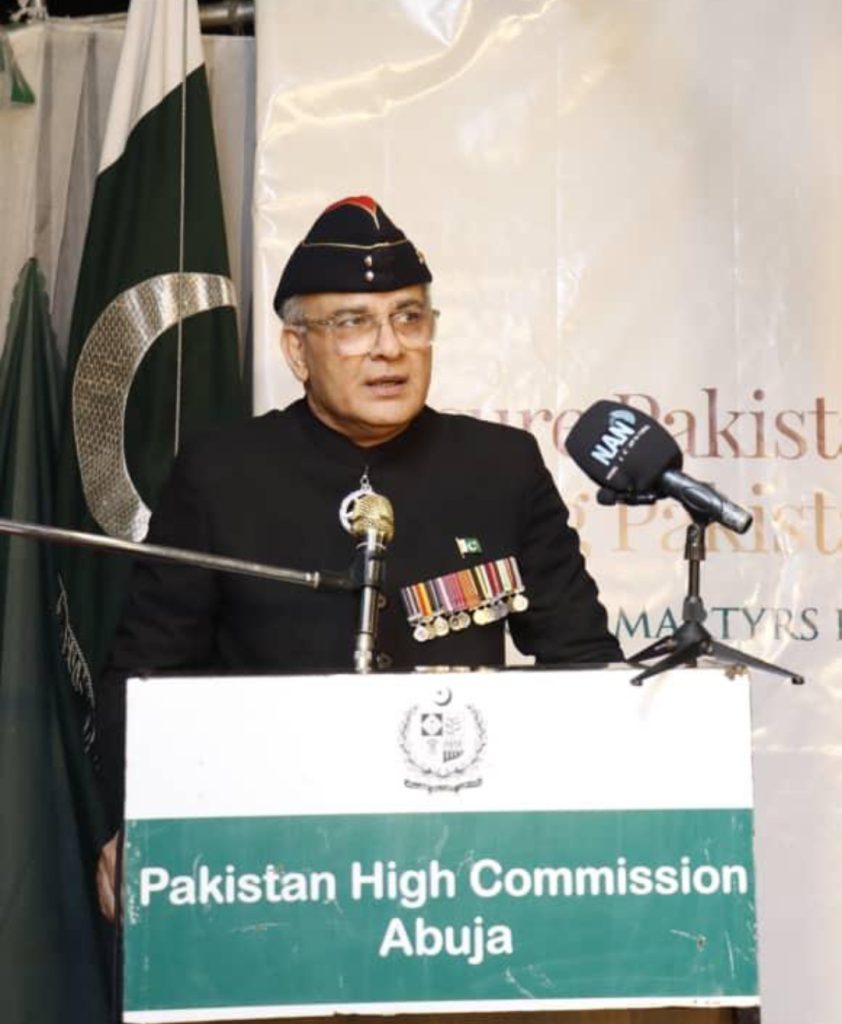
Pakistan’s High Commissioner in Nigeria, Rt. Maj.-Gen Sohail Khan. has strongly condemned India for spreading “baseless and irresponsible allegations” about Pakistan launching attacks on Pathankot, Jaisalmer, and Srinagar. Pakistan denies these claims, calling them “entirely unfounded” and “politically motivated” in a bid to malign the country and destabilize the region.
In a separate incident, Pakistan’s High Commission condemned an Indian missile attack on May 7 that struck nine locations across Pakistan, killing 37 civilians, including women and children. India also attempted drone attacks on May 8, but Pakistan’s military successfully shot down over 30 drones.
India claims Pakistan launched multiple attacks along its western border using drones and other munitions. However, Pakistan rejected these accusations, urging the international community to counsel India toward restraint and responsibility.
Rt. Maj.-Gen Khan urged international community to take serious note of this dangerous behavior and to counsel India toward restraint and responsibility. Any escalation based on false pretenses will be met with full resolve and determination to safeguard Pakistan’s sovereignty and territorial integrity.
“Pakistan remains vigilant and firmly committed to peace, but it will not be deterred by attempts to provoke, intimidate, or mislead and reserves the right to respond to acts of aggression. These allegations are rejected in the strongest possible terms”, he stated.
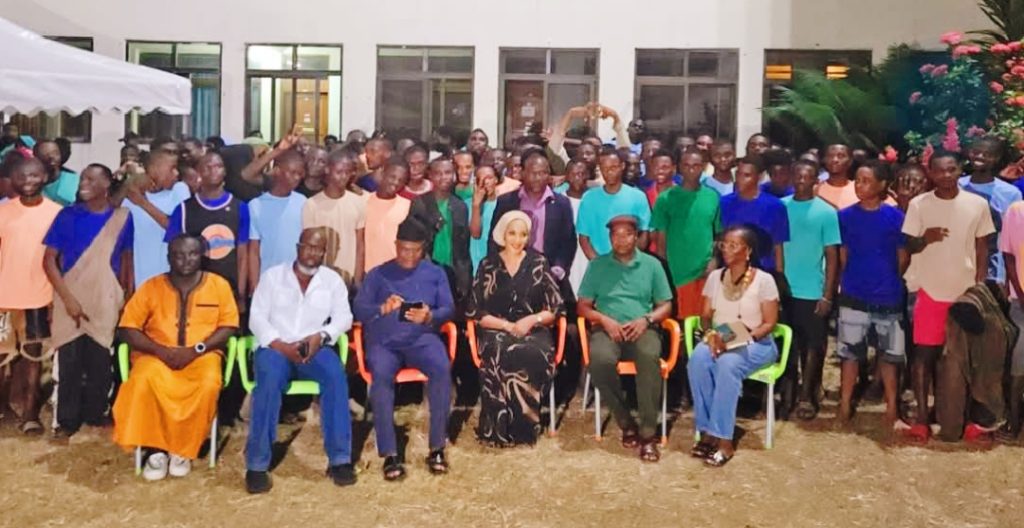
The Federal Government has lauded Ghanaian authorities for rescuing at least 219 young Nigerians who were trafficked to the West African country and forced into cybercrimes.
It also restated its commitment to providing the youth with technical education and skills to curb growing unemployment.
Minister of State for Foreign Affairs, Ambassador Bianca Odumegwu-Ojukwu stated these when she visited the Economic and Organised Crimes Office (EOCO) in Accra, Ghana, where the victims of trafficking were being detained.
In a closed door meeting with the Executive Director of the Agency, Mr. Bashiru Dapilah and two of his directors, the minister expressed gratitude to the operatives for doing their job professionally especially treating the victims with dignity.
Odumegwu-Ojukwu who was in Ghana for the official launch of the 50th anniversary of the Economic Community of West African States (ECOWAS) and the Extraordinary Session of the ECOWAS Council of Ministers on the withdrawal of Mali, Niger and Burkina Faso, described as callous and inhuman, the exploitation of innocent young people.
She said that trafficking was modern slavery, obnoxious and man’s inhumanity to man.
The Minister urged Nigerian youth to shun people who may promise them irresistible job offers outside the shores of the country, explaining it might just be bait to lure them into slavery.
She stated that the Nigerian High Commission in Ghana had last Thursday, alerted her of the incident and how the victims were held under inhuman conditions by the perpetrators before the sting operation that burst the evil syndicate.
She said: “Prior to their rescue, these boys had been locked up in about 25 rooms within the estate where they were used to perpetrate cybercrimes. At the time of their arrest, many of them, being locked inside confined spaces with computers for weeks on end without being let outside, were even unable to get their eyes to adjust to the sun when they were led outside those dark rooms. Some had been serially abused with visible lacerations inflicted on them by their criminal ‘don’ while one had his legs broken for not tendering all the proceeds of his cybercrime.”
Addressing the victims at the premises of the Agency, she said that they were lucky to have been rescued, disclosing that many had lost their lives in similar circumstances while others rot in jails in parts of the world.
“Count yourselves lucky as next time, it may not be a benevolent country like Ghana. It may not be a circumstance within a location where we have excellent bilateral relations. There are countries that take cybercrimes very seriously and by the time they lock you up, they will throw away the key. We are still trying to this day to ensure that Ethiopia signs our exchange or transfer of sentenced persons MoU so that we can bring those nationals who are trapped in their prisons back to Nigeria. So we don’t lose even more of them.
“We are happy that this commission has excellent relations with NAPTIP and they have been kind enough. I was really humbled when the Executive Director said their interest is not for these young men to get back to Nigeria into the prison system; because that’s what usually happens. Under that situation, they are obliged to hand you over to law enforcement, correctional facilities in Nigeria and then you know what will happen. It’s another cycle of your relatives coming to prison to bring you food,” Odumegwu-Ojukwu said.
The Minister highlighted that the Government was committed to citizen-centred diplomacy as a cardinal thrust of the foreign policy of President Bola Ahmed Tinubu-administration.
She said that the Renewed Hope Agenda of the Tinubu administration has laudable programmes particularly those that give skills to the youth so that they do not indulge in crimes of this nature.
She, therefore, urged the victims, to take advantage of this second chance that God has made possible for them by keying into some of the intervention programmes of the federal government.
She admonished: “Know that East, West, home is best. So, when you get home, give the government opportunity to equip you with skills.
“I am also using this opportunity to commend other Nigerians who are industrious, hardworking and law-abiding in Ghana.
“I can assure you that Ghana will have the support and cooperation of the Nigerian Government in the fight against organised crimes.
“It’s something that our own Economic and Financial Crimes Commission will want to be part of to ensure that we are not seen as headquarters of economic crimes.”
She noted described what happened as a success story, a model to how bilateral relations should be pursued in addressing economic and financial crimes.
Executive Director of the Agency, Mr. Dapilah, explained how his team acted on intelligence to achieve the feat.
“We are not looking at this as a Nigerian crime because you have some backing of Ghanaian. The estate where they lived, we arrested the owner and he will be prosecuted.
“We require collaboration between our two countries. The crime is committed here in Ghana but we know that somebody in Nigeria was behind it. So, these persons have been rescued but the next thing is the collaboration to ensure that the perpetrators are apprehended.
“As you go home, take the message to our counterpart in Nigeria that we will be needing collaboration to to roundup the perpetrators,” he said.
The Ghana anti-graft boss extolled majority of Nigerians in the country who he said were law-abiding and contributing significantly to the development of Ghana and its economy.
“We have a large Nigerian population here that are law-abiding especially where they are selling spare parts. We have a lot of them running restaurants where we go to eat Nigerian delicacies,” Dapilah said.
He also thanked the Nigerian High Commission for working closely with the Agency all these while, noting that the Chargé D’Affaires, Ambassador Dayo Adeoye collaborated with them.
Adeoye restated that over 3 million Nigerians reside in Ghana and many of them are doing well, helping the economic development of their host country.
He called for aggressive enlightenment to curb the spate of trafficking involving Nigerians.
Joined with other victims of trafficking intercepted in Ghana, no fewer than 231 young Nigerians are expected to arrive Lagos on Friday and handed to government officials.
(MAGNUS EZE, Special Assistant on Communication and New Media)
In a significant move towards securing a brighter, healthier, and more inclusive future for Nigerian children, the Federal Government has convened a stakeholders’ meeting to discuss the relaunch and scaling of the Renewed-Hope National Home-Grown School Feeding Programme (RH-NHGSFP). The meeting, held at the Federal Secretariat in Abuja, was led by the Honourable Minister of State for Humanitarian Affairs and Poverty Reduction, Dr. Tanko Yusuf Sununu.
Dr. Sununu emphasized the need for substantial funding, estimating that approximately 900 billion to 1 trillion Naira will be required annually to provide nutritious meals for primary school pupils in grades 1 to 3, with a target of three meals per week. He highlighted the importance of collaboration, stating that beyond federal government appropriations, additional funding sources are crucial for the successful implementation of the programme.
Responding to the funding requirements, the National Coordinator and CEO of the National Social Investment Programme, Associate Professor Badamasi Lawal, outlined potential funding sources. These included presidential support, donations and grants from international donors and key stakeholders, as well as 5% of recovered repatriation funds.
Dr. Badamasi stated, “As stakeholders, your technical expertise, strategic insights, and financial support are invaluable. Through this engagement, we aim to identify collaborative pathways that will strengthen and sustain the programme’s goals in alignment with the Sustainable Development Goals—particularly in eradicating hunger, ensuring quality education, and alleviating poverty.”
He further explained that the RH-NHGSFP is more than just an initiative; it embodies the Renewed Hope Agenda of His Excellency, President Bola Ahmed Tinubu. This agenda seeks to address critical national challenges through inclusive, people-centered solutions. “Through this programme, we will tackle malnutrition, improve school attendance, empower smallholder farmers, and stimulate local economies—one nutritious meal at a time,” he emphasized.
Dr. Badamasi also highlighted that the enhanced model of the programme promises improved efficiency, transparency, inclusiveness, and measurable impact. “We hope that it will not only serve as a national success story but also as a model for other countries seeking sustainable school feeding systems,” he added.
The meeting concluded with a presentation by the National Programme Manager, Dr. Princess Aderemi Adebowale, who introduced the Enhanced Platform of the NHGSFP, marking the beginning of a renewed and invigorated journey towards an improved programme.