

Joseph Konye

The Director-General of the Nigeria Civil Aviation Authority (NCAA), Capt. Chris Ona Najomo, has commended sister aviation agencies and industry stakeholders for their collective contributions as Nigeria undergoes the International Civil Aviation Organisation (ICAO) Coordinated Validation Mission (ICVM).
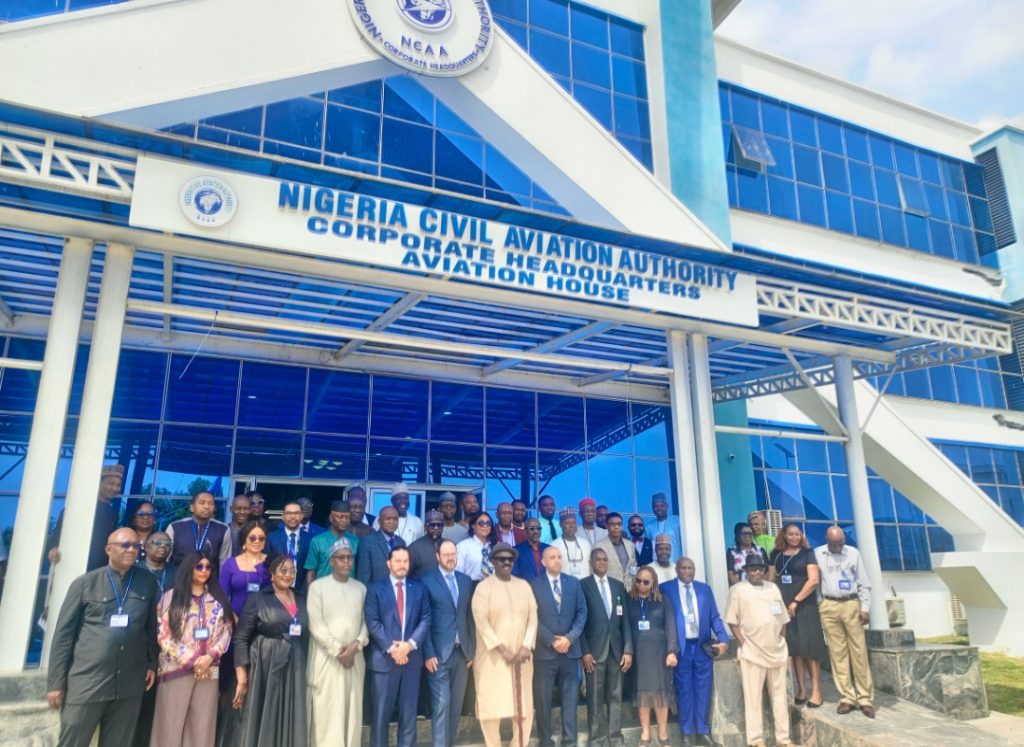
Speaking at the opening ceremony of the audit in Abuja, Najomo expressed appreciation for the collaboration and support that have strengthened Nigeria’s aviation safety oversight system, noting that the achievements recorded so far were the result of a coordinated industry effort.
The ICAO ICVM team is in Nigeria to validate the country’s level of compliance with global aviation safety standards and assess the effectiveness of corrective actions taken to address previously identified deficiencies.
Najomo explained that the exercise is a follow-up to the ICAO Universal Safety Oversight Audit Programme Continuous Monitoring Approach (USOAP-CMA) audit conducted between August and September 2023, where Nigeria recorded an Effective Implementation (EI) score of 70.12 percent.
He noted that Nigeria approached the audit findings with seriousness, undertaking detailed root cause analyses and implementing comprehensive Corrective Action Plans (CAPs), which have since been validated by ICAO.
While thanking sister agencies for their roles, the DGCA highlighted key reforms and milestones achieved by the NCAA, including the deployment of modern regulatory software such as EMPIC for personnel licensing and aeromedical processes, and the adoption of SMS Pro for centralized safety data reporting in line with ICAO Annex 19 requirements.
He also pointed to significant investments in human capacity development, revealing that over 100 flight operations and airworthiness inspectors have undergone specialized training in Europe and the Middle East, with additional on-the-job training ongoing through international collaborations, including a partnership with the Rwandan Civil Aviation Authority.
Najomo further disclosed that Nigeria has strengthened regional cooperation by signing Memoranda of Understanding with neighbouring Flight Information Regions (FIRs) to enhance seamless and safe air traffic flow across borders.
Other improvements include the implementation of a robust rule-making process to ensure timely adoption of ICAO Standards and Recommended Practices (SARPs), certification of international aerodromes under a stringent five-phase process, and the establishment of a state-of-the-art flight data centre to support risk-based safety oversight under the State Safety Programme (SSP).
According to him, Nigeria also worked closely with the ICAO West and Central Africa (WACAF) Regional Office, hosting two Regional Office Safety Team (ROST) assistance missions in 2025 and 2026, with recommendations from those engagements fully implemented.
Reiterating the country’s commitment, Najomo stressed that the objective of the audit goes beyond improving Nigeria’s EI score.
“Our goal is not just about numbers, but to institutionalise a resilient safety oversight system that guarantees continuous improvement in aviation safety performance,” he said.
He added that this commitment aligns with the Federal Government’s policy of strict adherence to international safety standards, which will ultimately enhance Nigeria’s global aviation standing.
In his remarks, the ICVM Team Lead, Mr. Jerome Patoreaux, outlined the eight critical elements used by ICAO to assess a country’s safety oversight capability, including legislation, regulations, technical personnel, surveillance, and resolution of safety concerns.
The ongoing audit which will run from 15-22 April, 2026, is expected to further validate Nigeria’s progress and reinforce confidence in the country’s aviation safety framework.