Alex- Joseph Konye

Stakeholders in Nigeria’s media, security, judicial, and civil society sectors have renewed calls for urgent action to curb rising attacks on journalists, as concerns mount ahead of the 2027 general elections.
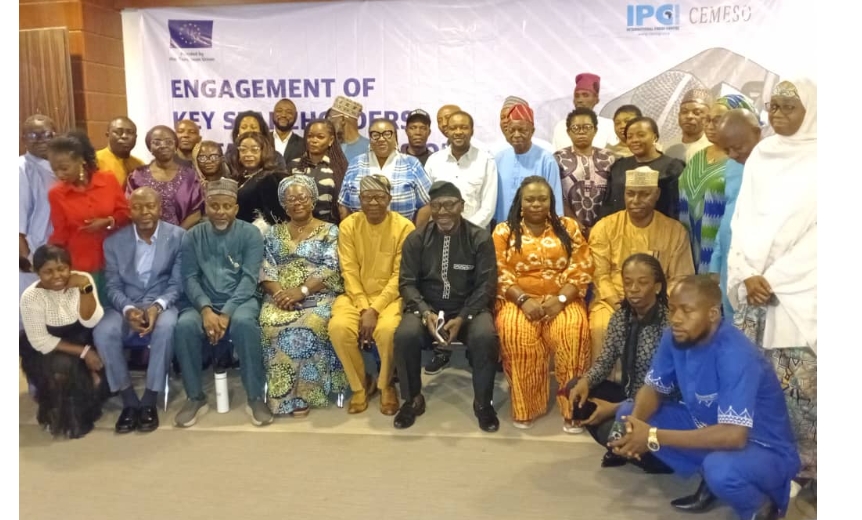
This was the focus of a high-level engagement convened in Abuja by the International Press Centre (IPC) and Centre for Media and Society (CEMESO) under the Support-to-Media Component of the European Union Support to Democratic Governance (EU-SDGN) Phase II.
Held at BON Hotel Octagon, the meeting brought together key institutional actors to examine the growing pattern of intimidation, harassment, and violence against media professionals in Nigeria’s electoral environment.
Speaking at the forum, IPC Executive Director, Lanre Arogundade, expressed concern over what he described as a persistent threat to press freedom, warning that attacks on journalists weaken democratic accountability and public trust. He revealed that at least 20 cases of journalist attacks were recorded during the 2023 general elections, including arrests, assaults, and other forms of harassment.
Arogundade emphasised the need to treat media safety as a national democratic priority rather than a sectoral concern. He further disclosed plans by IPC to engage the Office of the Inspector General of Police toward developing a formal framework to enhance journalist protection during elections.
Also speaking, CEMESO Executive Director, Akin Akingbulu, described the engagement as a deliberate, evidence-driven effort to move beyond dialogue into actionable commitments. He warned that recurring patterns of intimidation and impunity against journalists pose a serious risk to Nigeria’s democratic integrity, especially ahead of the Ekiti, Osun, and 2027 elections.
Akingbulu noted growing anxiety among journalists, particularly in Ekiti State, where preparations for upcoming elections are already raising safety concerns among media practitioners.
Participants at the meeting—including representatives of security agencies, judicial institutions, civil society organisations, development partners, and media practitioners from both public and private outlets—reviewed documented cases of attacks and explored strategies for improved prevention, rapid response, and accountability.
The forum also highlighted the need for stronger policy and regulatory safeguards to protect press freedom and digital rights, while reinforcing collaboration among state institutions and media stakeholders.
Organisers commended development partners for their continued support toward strengthening democratic governance and ensuring a safer operating environment for journalists in Nigeria.