
Maryam Aminu

Environmental engineers have raised the alarm over the growing threat that rapid urbanisation and climate change pose to Nigerian cities, warning that unchecked development, poor waste management and weak environmental planning could undermine the nation’s future if urgent action is not taken.
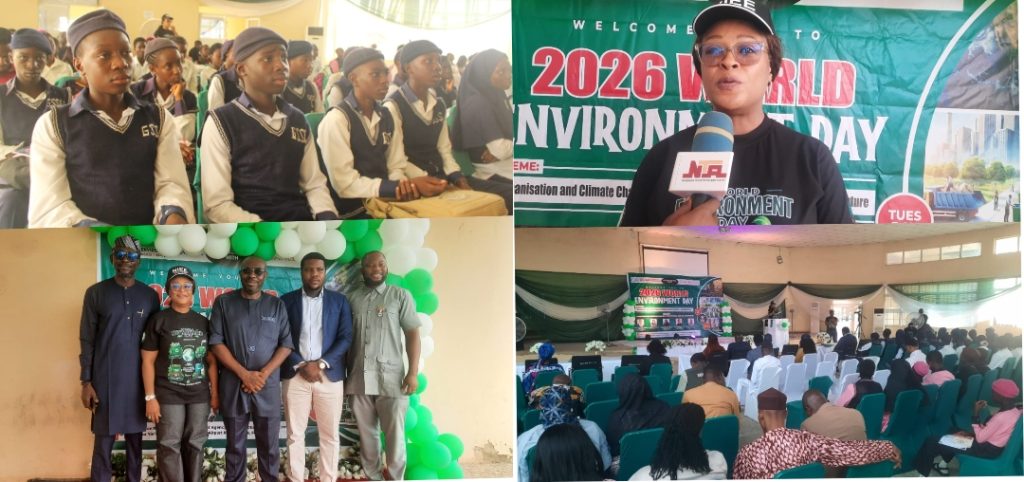
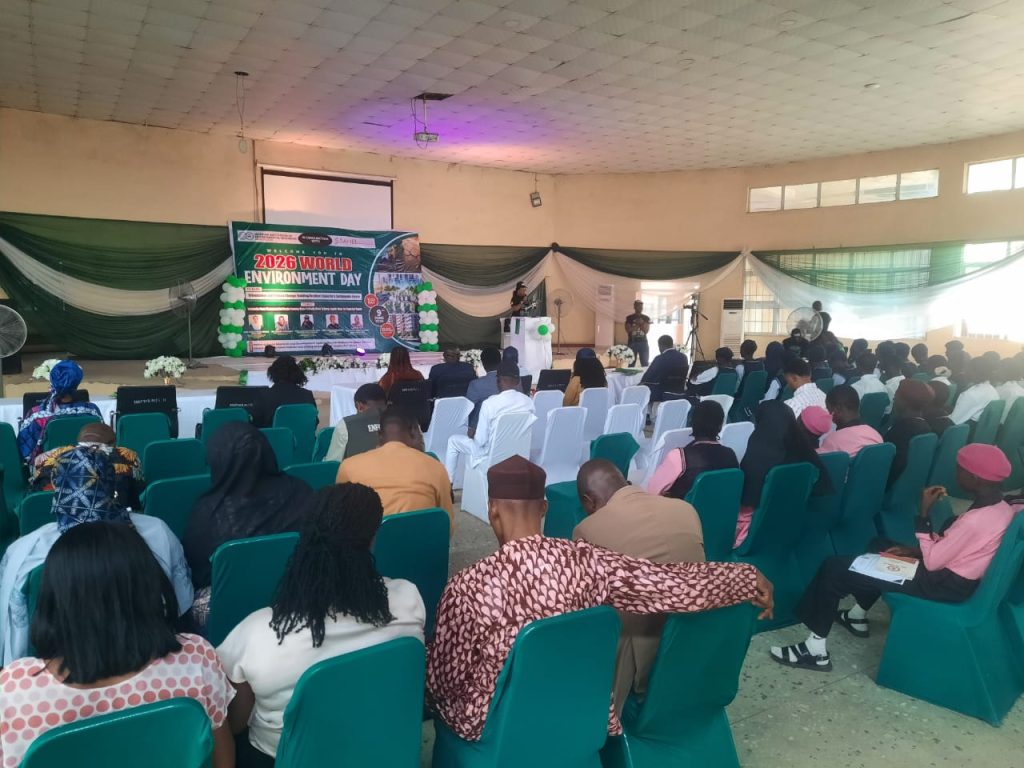
The warning came during the 2026 World Environment Day celebration organised by the Nigerian Institution of Environmental Engineers (NIEE), Abuja Chapter, in partnership with Sahel Consulting Agriculture and Nutrition Limited, where experts, policymakers, students and environmental advocates gathered to chart pathways towards building resilient and sustainable cities.
The event, themed “Urbanisation and Climate Change: Building Resilient Cities for a Sustainable Future,” focused on the need for innovative environmental solutions, sustainable waste management systems and stronger collaboration among stakeholders to safeguard the environment for future generations.
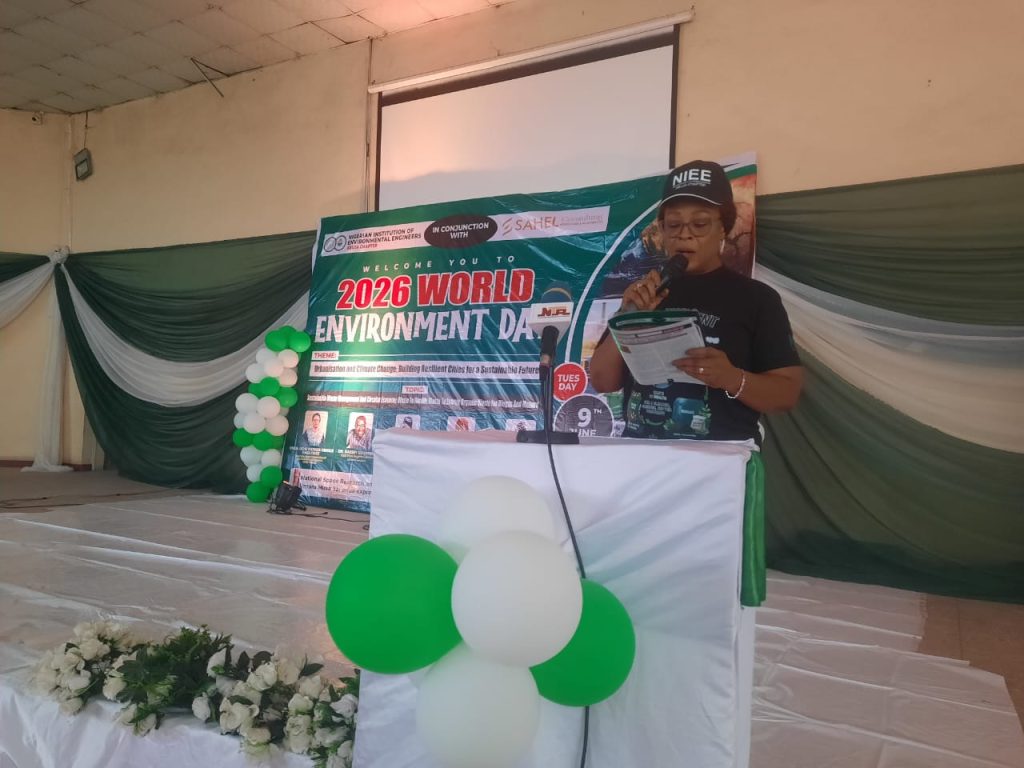
In her welcome address, Chairman of the Nigerian Institution of Environmental Engineers (NIEE), Abuja Chapter, Engr. Uche Patrick-Obikile, FNSE, FNIEE, said the gathering was more than a ceremonial observance, describing it as a call to action at a time when environmental challenges are becoming increasingly severe.
According to her, World Environment Day offers an opportunity for society to reflect, recommit and take practical steps towards protecting the planet, stressing that environmental sustainability remains critical to human survival and economic prosperity.
She noted that the health of the environment is directly linked to the quality of life enjoyed by citizens, adding that environmental stewardship should not be left to governments alone but must become a collective responsibility involving the private sector, civil society, professional institutions and individual citizens.
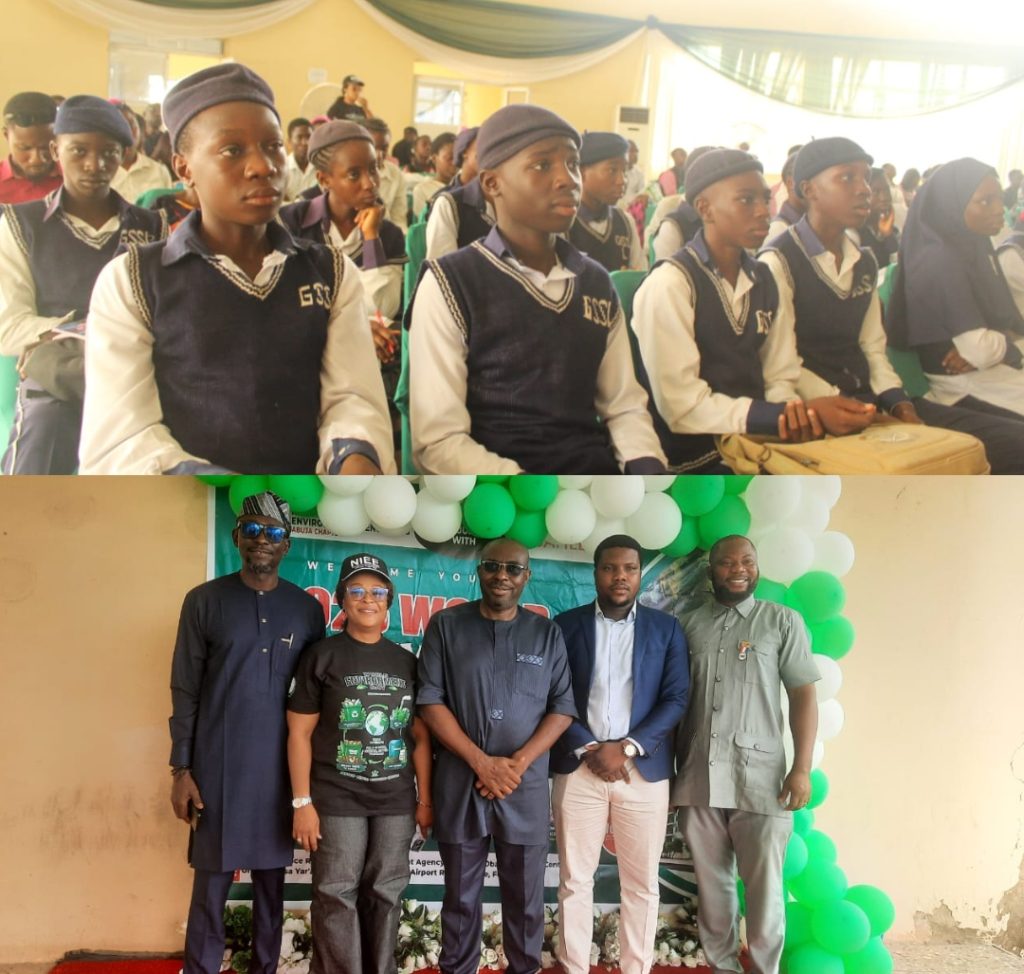
Patrick-Obikile commended the partnership between NIEE and Sahel Consulting Agriculture and Nutrition Limited, describing it as a demonstration of how multidisciplinary collaboration can provide solutions to complex environmental problems. She said sustainable development requires integrated thinking that brings together expertise from engineering, agriculture, nutrition and environmental management.
Speaking on the event’s theme, she observed that Abuja’s rapid urban expansion presents significant challenges for infrastructure, environmental governance and city planning. She warned that construction on floodplains, indiscriminate development and the disappearance of green spaces are no longer isolated issues but environmental emergencies requiring urgent professional intervention.
The chapter chairman also highlighted the technical focus of the programme, titled “Sustainable Waste Management and Circular Economy: Waste to Wealth, Waste to Energy, Organic Waste for Biogas and Manure,” noting that the world is increasingly transforming waste from an environmental burden into an economic asset.
She said modern environmental management now recognises waste as a source of energy, wealth creation and agricultural inputs, adding that engineers and entrepreneurs around the world are already deploying circular economy models to create jobs, reduce pollution and support sustainable growth.
Patrick-Obikile further expressed optimism about the next generation of environmental leaders, particularly the students participating in the environmental quiz competition and newly launched Schools Environment Club initiative.
Addressing the students directly, she encouraged them to remain curious, innovative and committed to environmental protection, noting that the future of environmental sustainability rests largely in their hands.
“The engineers, scientists and environmental advocates seated here today were once students like you. The difference between those who transformed society and those who watched events unfold was their willingness to learn, lead and ask questions. Your participation today is evidence that the future of environmental stewardship is secure,” she said.
Delivering his opening remarks as National Chairman of the Nigerian Institution of Environmental Engineers and Chairman of the occasion, Engr. Caius Ikem Umekesiobi, described urbanisation as one of the defining realities of the modern world.
He said while cities remain centres of economic growth, innovation and social advancement, they have also become major contributors to greenhouse gas emissions, environmental degradation and unsustainable resource consumption.
According to him, the effects of climate change are already visible through increasing incidences of flooding, prolonged droughts and extreme heatwaves, all of which place enormous pressure on urban infrastructure and threaten the wellbeing of residents.
Umekesiobi stressed that engineers have a crucial role in helping societies adapt to these realities, explaining that resilient cities require more than physical structures. They require foresight, innovation, sustainability and collaboration among professionals across different sectors.
He called for the integration of green technologies, improved waste management systems, sustainable transportation networks and better water resource management into urban planning processes.
“Our cities must reflect our commitment to environmentally sound practices. Urban centres can be productive, prosperous and sustainable if we make deliberate choices today,” he said.
The NIEE National Chairman further advocated stronger engagement with policymakers, community leaders and citizens to promote climate-resilient infrastructure and environmental conservation.
He reaffirmed the institution’s commitment to championing initiatives that support sustainable urban development, noting that partnerships and knowledge sharing would be critical in addressing the challenges posed by climate change.
“We must leave here today determined to implement sustainable practices, advocate resilient infrastructure and educate others on the critical intersection between urbanisation and climate change.
Through collective action, we can build cities that serve as enduring models of sustainability for future generations,” he added.
Delivering the keynote address on “Urbanisation and Climate Change: Building Resilient Cities for a Sustainable Future,” Chief Executive Officer of PCM Nigeria Limited, Dr. Bassey Uzodinma, urged engineers and construction professionals to place environmental sustainability at the centre of development projects.
Uzodinma observed that rapid urban growth across Nigeria has intensified pressure on ecosystems, natural resources and public infrastructure, making it imperative for engineers to adopt designs and technologies that minimise environmental impact.
He stressed that development projects should no longer be measured solely by economic returns or structural sophistication but by their ability to coexist harmoniously with the environment and support long-term sustainability.
According to him, the future of engineering lies in designing infrastructure capable of withstanding climate-related shocks such as flooding, erosion, heat stress and other environmental hazards.
The keynote speaker encouraged professionals to embrace innovative construction methods, environmentally friendly materials and nature-based solutions that enhance resilience while preserving ecological balance.
He also highlighted the need for stronger environmental impact assessments and enforcement mechanisms, noting that many urban challenges could be avoided if environmental considerations were integrated from the earliest stages of project planning.
Speaking on behalf of Sahel Consulting Agriculture and Nutrition Limited, Noah Edozie, Senior Analyst, Strategy and Business Development, said climate resilience in agriculture has become a critical component of national development and food security.
Edozie said the event’s theme aligns closely with ongoing efforts to strengthen the capacity of farmers and agricultural systems to cope with climate-related challenges.
He explained that Nigeria’s agricultural sector supports more than 35 million smallholder farmers and provides employment for a significant proportion of the country’s workforce. However, he noted that climate variability is making farming increasingly difficult, with rainfall patterns becoming more unpredictable and extreme weather events occurring more frequently.
According to him, many farmers now struggle to make informed decisions because they lack timely and accurate climate information, often resulting in reduced harvests and economic losses that ultimately affect urban food supplies.
“Floods that farmers once anticipated and prepared for now arrive with devastating intensity. Without reliable climate information, farmers are forced to make critical decisions in uncertainty, and the consequences extend beyond the farm to national food security and economic stability,” he said.
Edozie emphasised the importance of early warning systems, climate intelligence and data-driven decision-making in helping farmers adapt to changing environmental conditions.
He noted that strengthening climate resilience in rural communities would have direct benefits for urban centres by improving food availability, stabilising prices and supporting economic growth.
The Sahel Consulting representative called for greater investment in climate adaptation initiatives, agricultural innovation and cross-sector partnerships to ensure sustainable development across both urban and rural communities.
The event also featured recognition of environmental champions, sessions on sustainable waste management and a quiz competition designed to inspire young Nigerians to take greater interest in environmental protection and sustainability.
Organisers expressed hope that the discussions would translate into practical projects, stronger policies and long-term solutions capable of addressing Nigeria’s environmental challenges.